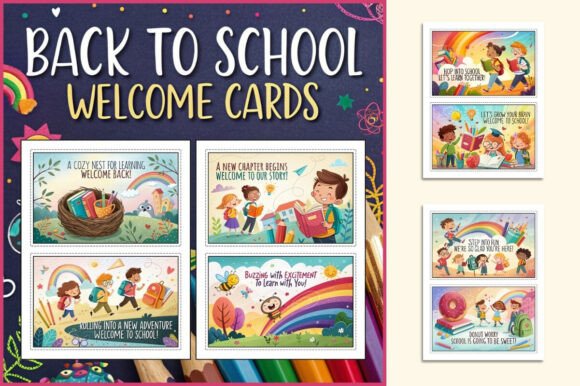
Back to School Welcome Cards for Kids
Back to School Welcome Cards for Kids are a strategic resource designed to help educators create a positive and engaging classroom environment from the very first day of school. These cards offer a variety of themes, including animals, sweet treats, outdoor adventures, space, and growth mindset, making them versatile tools that can be tailored to different classroom settings and student interests. With 11 printable pages included, these cards provide teachers with multiple opportunities to welcome students in a fun and meaningful way.
The Back to School Welcome Cards set is not just about aesthetics; it's about creating a sense of belonging and excitement. Each card features lighthearted messages that resonate with children and encourage them to feel seen and valued. This makes them an excellent tool for building rapport and setting the tone for the entire school year.
Strategic Use of Back to School Welcome Cards for Kids
When used thoughtfully, Back to School Welcome Cards for Kids can support a range of educational goals. They can be incorporated into classroom planning as part of a broader strategy to enhance student engagement and foster a welcoming atmosphere. Teachers can use these cards to introduce new students, reinforce classroom values, or simply bring joy to the learning environment.
One practical example of using these cards is placing them on student desks before the school year begins. This small gesture can make a big impact, helping students feel excited and prepared for the challenges ahead. Additionally, teachers can feature these cards on bulletin boards or during open house events to showcase their commitment to creating a positive learning experience.
Planning and Positioning with Back to School Welcome Cards for Kids
Before relying on Back to School Welcome Cards for Kids, it’s important to consider how they align with your overall classroom goals and positioning. For instance, if you're aiming to build a community-centered classroom, these cards can serve as a starting point for fostering connections among students. They can also be used as part of a larger communication strategy that includes parent involvement and student feedback.
Teachers should think about when to use these cards most effectively. Are they best suited for the beginning of the school year, or can they be used throughout the term? Consider integrating them into specific activities or lessons that promote creativity and interaction. By doing so, you ensure that the cards are not only visually appealing but also educationally valuable.
Enhancing Creativity and Classroom Interaction
Back to School Welcome Cards for Kids are more than just decorative elements; they can be powerful tools for enhancing creativity and encouraging classroom interaction. Teachers can use these cards as prompts for discussions, writing exercises, or group activities. For example, a card featuring an animal could spark a conversation about different species or lead to a creative writing assignment where students imagine themselves as that animal.
Additionally, these cards can be used to initiate collaborative projects. Students might work together to create a class mural based on the themes presented in the cards or design their own welcome cards for future students. Such activities not only promote teamwork but also allow students to express their individuality and contribute to the classroom culture.
Practical Examples and Planning Tips
To maximize the benefits of Back to School Welcome Cards for Kids, consider the following planning tips:
- Set clear objectives: Determine what you hope to achieve by using these cards. Are you looking to boost morale, encourage participation, or simply create a more inviting classroom?
- Align with themes: Choose cards that match the current classroom theme or unit of study. This ensures that the cards are relevant and meaningful to your students.
- Involve students: Allow students to select their favorite cards or even create their own versions. This promotes ownership and engagement.
- Track outcomes: Monitor how the use of these cards affects student behavior, participation, and overall classroom atmosphere. Adjust your approach based on what works best.
By incorporating these strategies, teachers can ensure that Back to School Welcome Cards for Kids are used intentionally rather than randomly. This intentional use helps create a cohesive classroom experience that supports both academic and social-emotional learning.
Considering Risks and Ensuring Effective Use
While Back to School Welcome Cards for Kids offer numerous benefits, there are potential risks to consider. One risk is using them without clear goals or context, which may result in them being perceived as mere decorations rather than valuable educational tools. To avoid this, it's essential to integrate these cards into a well-thought-out plan that aligns with your teaching philosophy and classroom objectives.
Another risk is overusing the cards without varying the approach. While repetition can be beneficial, it's important to keep the classroom dynamic and engaging. Teachers should periodically assess how these cards are being used and make adjustments as needed to maintain their effectiveness.
Long-Term Value and Decision-Making Guidance
When considering the long-term value of Back to School Welcome Cards for Kids, it's important to recognize that these resources can contribute to a positive classroom culture that extends beyond the first few weeks of school. By consistently using these cards in a thoughtful manner, teachers can create a foundation for ongoing student engagement and community building.
For decision-makers and educators, it's crucial to evaluate how these cards fit within the broader educational landscape. Are they aligned with current trends in education? Do they support inclusive practices and diverse learning needs? By asking these questions, educators can ensure that their use of Back to School Welcome Cards for Kids is both effective and impactful.
In conclusion, Back to School Welcome Cards for Kids are a valuable resource that can enhance the classroom experience when used strategically. By focusing on clear goals, thoughtful planning, and intentional implementation, teachers can create a welcoming and engaging environment that supports student success throughout the school year.