Back to School Math Activities for Kids
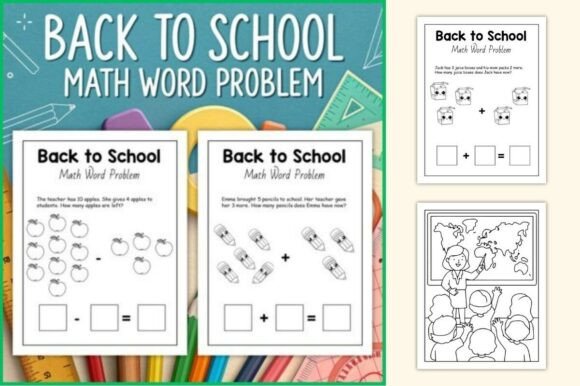
As the summer sun fades and the scent of new notebooks fills the air, parents, educators, and caregivers are faced with a pivotal moment: preparing children for the academic journey ahead. This is where Back to School Math Activities for Kids becomes more than just a routine exercise—it transforms into a strategic tool that bridges learning gaps and builds foundational skills. With its focus on real-world problem-solving through simple addition and subtraction word problems, this resource offers a unique opportunity to align educational goals with practical application.
Back to School Math Activities for Kids is not merely about numbers; it's about context. By embedding math within relatable scenarios such as packing school supplies or sharing snacks, children are encouraged to see mathematics as a part of their daily lives rather than an abstract concept confined to textbooks. This contextual approach can be strategically useful in reinforcing learning outcomes while making the transition back to school less daunting.
Strategic Use of Back to School Math Activities for Kids
When used thoughtfully, Back to School Math Activities for Kids can support multiple objectives beyond basic arithmetic. For educators, it serves as a valuable supplement to curriculum planning, helping to identify areas where students may need additional reinforcement. For parents, it provides a structured yet engaging way to reinforce classroom learning at home without overwhelming young learners.
The worksheet set’s 11 pages are designed with purpose—each page introduces new scenarios that build upon previous concepts. This progressive structure supports goal-oriented learning, ensuring that each activity contributes meaningfully to the child’s mathematical development. Educators can use these activities to assess understanding, track progress, and tailor instruction based on individual needs.
Moreover, the inclusion of relatable school themes ensures that the content remains relevant and engaging. When children can visualize themselves in the scenarios presented, they are more likely to invest emotionally and intellectually in the learning process. This emotional engagement can translate into better retention and a stronger foundation for future math concepts.
Planning and Implementation Tips
Before integrating Back to School Math Activities for Kids into your educational plan, consider the following:
- Identify Learning Goals: Determine what specific math skills you want to reinforce. Are you focusing on addition, subtraction, or both? Align the activities with these objectives to ensure targeted practice.
- Assess Readiness: Evaluate the child’s current skill level before beginning. Some activities may be more challenging than others, so it's important to match the difficulty to the learner’s ability to avoid frustration.
- Create a Routine: Consistency is key when building new skills. Set aside dedicated time each day or week for these activities to create a habit of regular practice.
- Incorporate Real-World Context: Encourage children to apply what they learn in the worksheets to real-life situations. For example, ask them to calculate how many pencils they need for the school year or how much money they have left after buying supplies.
By approaching these activities with intention, you can turn them from mere exercises into meaningful learning experiences that support long-term academic success.
When to Use Back to School Math Activities for Kids
Back to School Math Activities for Kids is most effective during the early stages of the school year, when children are still adjusting to new routines and expectations. It can also be beneficial throughout the year as a review tool or during periods of slower academic progress.
Educators might find it particularly useful in the first few weeks of school, as it helps students ease back into the rhythm of learning while reinforcing essential math skills. Parents can use it during summer break or over holidays to maintain continuity in learning without disrupting the child’s schedule.
Additionally, these activities can serve as a diagnostic tool to identify gaps in understanding before more complex topics are introduced. By using the worksheet set early on, educators and parents can address potential weaknesses proactively, setting the stage for more advanced learning later in the year.
Possible Risks and Considerations
While Back to School Math Activities for Kids offers numerous benefits, there are risks associated with its misuse. Without clear goals or proper context, these activities may become repetitive or unengaging, leading to diminished interest and effectiveness. Over-reliance on worksheets without incorporating hands-on or interactive elements can also limit the depth of learning.
To mitigate these risks, it's essential to balance worksheet-based learning with other forms of instruction. Pairing these activities with manipulatives, games, or group discussions can enhance understanding and make the learning experience more dynamic. Additionally, varying the types of problems and scenarios can help maintain student engagement and prevent monotony.
Another consideration is the importance of feedback. Simply completing a worksheet without reviewing mistakes or discussing solutions can hinder growth. Providing constructive feedback and encouraging reflection are crucial components of effective learning.
Long-Term Value and Decision-Making Guidance
Investing in Back to School Math Activities for Kids is an investment in long-term educational outcomes. These activities lay the groundwork for critical thinking, problem-solving, and confidence in math—an essential skill set that extends far beyond the classroom.
For educators, incorporating these resources into lesson plans can contribute to a well-rounded curriculum that emphasizes both conceptual understanding and practical application. For parents, using these activities at home can foster a positive attitude toward learning and encourage a lifelong love of math.
When deciding whether to use Back to School Math Activities for Kids, consider the following questions:
- What are the specific learning goals for my child or students?
- How does this resource align with our current curriculum or learning plan?
- Can we integrate these activities with other teaching methods to create a balanced learning experience?
- Will we provide adequate support and feedback to ensure meaningful learning takes place?
Answering these questions thoughtfully will help ensure that the use of Back to School Math Activities for Kids is intentional and impactful.
In conclusion, Back to School Math Activities for Kids is more than just a collection of worksheets—it's a strategic educational tool that can support learning goals, enhance problem-solving skills, and make math more accessible and enjoyable for children. By using it with purpose and care, educators and parents can help set the stage for a successful and confident start to the school year.